
Slingd
Slingd
A headless e-commerce storefront for Christian apparel built on Next.js and WooGraphQL.
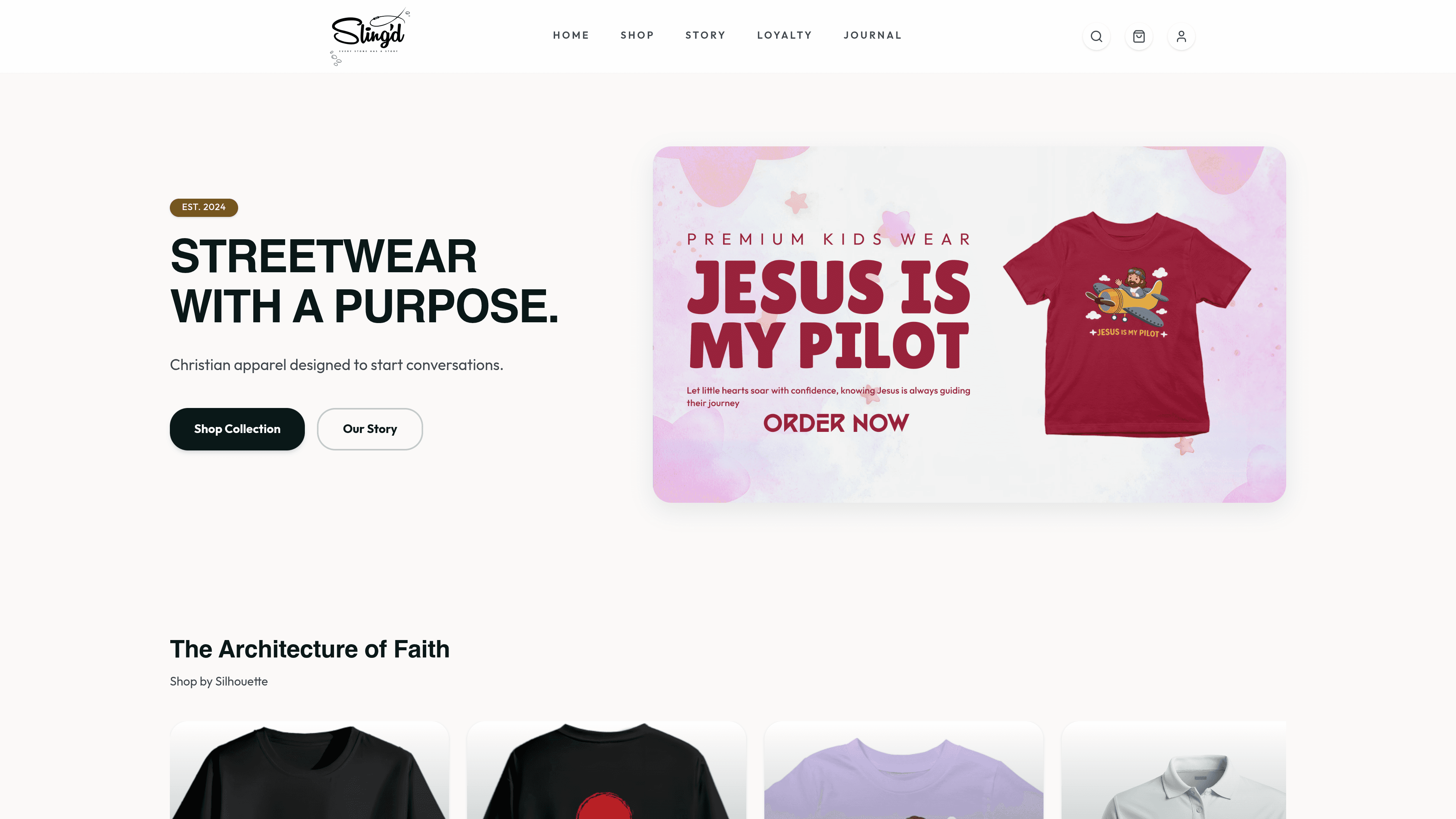
A high-performance headless storefront leveraging Next.js 14, Apollo Client, and WooGraphQL to deliver a seamless shopping experience. The platform features an integrated vendor management system, real-time cart synchronization, and a custom checkout flow.
Monolithic slow-loading storefronts.
Traditional WooCommerce setups often suffer from slow page loads and rigid, monolithic themes that hinder user experience and brand identity. The existing ecosystem lacked a performant, decoupled interface capable of handling complex product variations, multi-vendor commission tracking, and a modern, mobile-first checkout flow.
Headless.
Lightning Fast.
The architecture utilizes a headless approach, decoupling the frontend from the WordPress backend via a robust GraphQL API. Key technical implementations include a custom CartContext for state management, Apollo Client for efficient data fetching, and a sophisticated variation management system for vendors. The checkout process is optimized for conversion, integrating custom shipping calculators and PCI-compliant redirects.
Distributed GraphQL Data Orchestration
System Core // VariationCommandCenter.jsx
const groupedVariations = variations.reduce((acc, variation) => {
    const color = variation.attributes?.nodes?.find(a => a.name.toLowerCase() === 'color')?.value || 'Default';
    if (!acc[color]) acc[color] = [];
    acc[color].push(variation);
    return acc;
}, {});

const handleQuickSelect = (attrName, attrValue) => {
    if (!attrName || !attrValue) return;
    const targetIds = variations.filter(v =>
        v.attributes?.nodes?.some(a => a.name.toLowerCase() === attrName.toLowerCase() && a.value === attrValue)
    ).map(v => v.id);
    setSelectedVariations(new Set(targetIds));
};
Next Case Study